Granby Carlton – Fees & Funding Information (2025/26)

Granby Carlton – Fees & Funding Information (2025/26)
Effective from:1/09/25

We aim to provide transparent, fair and fully compliant information regarding our childcare fees and funded childcare arrangements. Please read the following carefully and speak with the Nursery Manager if you require any clarification.
Daily Rate (includes breakfast, lunch, light tea, snacks, and drinks) £71.50
Morning (includes breakfast, lunch, snacks, and drinks) £41.50
Afternoon (includes light tea, snacks, and drinks) £40.50
Late Collection (per 15 minutes) £10.00
Full Day Meals (includes breakfast, lunch, light tea, snacks, and drinks) £12.00
Morning Meals (includes breakfast, lunch, snacks, and drinks) £7.00
Afternoon Meals (includes light tea, snacks, and drinks) £5.00
Early start £5.00
Hourly Rate £9.00
Session Times
Full Day 8.00am to 6.00pm
Morning 8.00am to 1.00pm
Afternoon 1.00pm to 6.00pm
Registration Fee / Deposit
Registration Fee (non-funded bookings): £60.00 (non-refundable)
This fee applies when booking any paid childcare hours.
Fully Funded Bookings Only:
For children accessing funded hours only (without any paid hours), the £60 is treated as a deposit and is refunded within the first month of attendance.
Payment Information
• All fees are payable in advance.
• We accept: cash, standing order, childcare vouchers, and Tax-Free Childcare.
• Full fees remain payable for sickness and holidays.
Early Education Funding (EEF)
We offer government-funded childcare for eligible families.
Funding for Working Families (Ages 9 months – 5 years)
Eligible working families may access up to 30 funded hours per week across all age groups, subject to HMRC criteria.
You must reconfirm eligibility with HMRC every 3 months.
Check your eligibility at:
www.childcarechoices.gov.uk
Stretched Funding Offer
To support year-round childcare, we stretch funded hours across the full year.
Funded hours may be taken as:
• 10-hour sessions, or
• 5-hour sessions
Any hours beyond your child’s funded entitlement are charged at our standard hourly rate.
Funded Sessions – Important Information
Government funding does not cover:
• Meals
• Snacks
• Drinks
• Consumables (wipes, sun cream, etc.)
• Extra-curricular activities
• Additional hours beyond your funded entitlement
These items remain the parent’s responsibility.
Additional Voluntary Charges – Meal & Consumables Package
Because government funding does not include meals or consumables, we apply an optional Meal Package to funded sessions.
Meal & Consumables Package (per session)
• Full Day: £12
• Morning: £7
• Afternoon: £5
This package covers:
• All meals (breakfast, lunch, light tea)
• Snacks & drinks
• Consumables such as wipes and sun cream
Allergy Policy – Important
Due to children with severe allergies, food from home is not permitted.
If you do not wish to opt in to the Meal Package, please speak with the Nursery Manager to arrange an individual plan.
This keeps the charge voluntary and compliant, while ensuring we maintain a safe allergy-controlled environment.
Compliance & Transparency
• Funding is shown clearly on your invoice as free entitlement hours.
• All additional hours, meal charges or optional extras are itemised separately.
• No child is required to take additional paid hours in order to access funded hours.
• No registration fee is required solely for accessing a funded place.
Contact Us
For personalised funding calculations, eligibility checks or to discuss meal package alternatives, please speak directly with your Nursery Manager.

Using Your Funded Hours
• Funded hours are applied in 5-hour or 10-hour blocks.
• If a session exceeds the funded entitlement, any additional hours are charged at the standard hourly rate (£9.00).
• Funded hours may be used across the week in line with the stretched model.
You will receive an itemised breakdown showing:
• Funded hours
• Additional paid hours
• Voluntary meal/consumable charges
• Any other optional extras
Additional Points
• Parents must maintain their HMRC funding codes.
• Funding cannot be used against late collection fees, registration fees (non-funded children), early starts, or private additional hours.
• All children attending funded sessions remain subject to our safeguarding, allergy and operational policies.

Share this

We are OUTSTANDING – Granby Parkgate

We are absolutely delighted, but not at all surprised, to announce that our Granby Parkgate nursery retained its outstanding rating at its recent inspection.
The inspector, Andrew Clark says “Children make strong and sustained progress in all aspects of learning. Children are safe and secure. They are extremely well behaved. Parents are highly appreciative of the professionalism, warmth and care the managers and staff show at all times.” Read the full report at https://files.ofsted.gov.uk/v1/file/50190715
Well done to all the amazing staff who continue to excel in everything they do. We are so very proud of them! 💚💚
Share this

Emotions – Granby Carlton

Children learn to identify two major emotions, ‘happy’ and ‘sad’ at an early age.

It is important they move on from putting everything into these two groups.

As part of getting ready for school we talk a lot about other people’s feelings, and how our actions make others feel, why is this important?

When adults provide support and explanations, it helps children understand what they can do to manage their feelings. Children who learn how to understand emotions in themselves and others are better able to regulate their own responses to strong emotions.

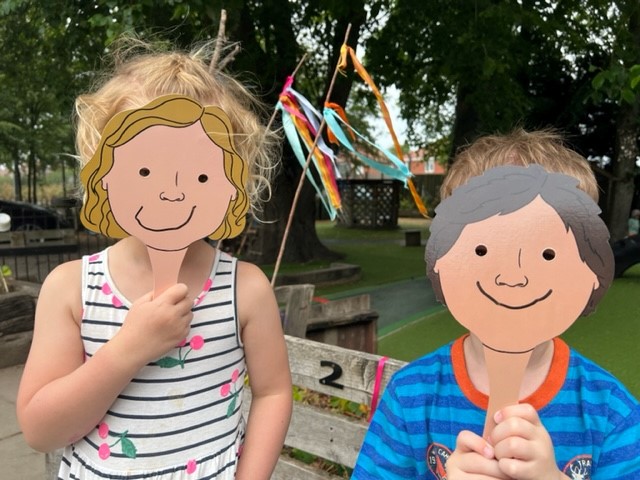
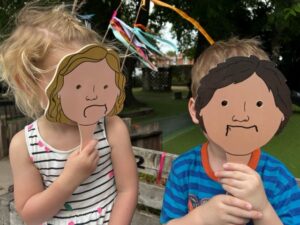
We help by reading stories to children about emotions and assisting them to identify the emotions the characters in the story display. encouraging children to talk about their feelings and the feelings of others. We also use paddle faces to draw how we feel and a range of other activities to support children’s learning.

The more the children learn about emotions the more they understand that someone might feel scared, rather than sad, this will help them learn how o respond appropriately.

Share this

Subitising – Granby Parkgate

Young children have a remarkable skill: they can recognise numbers of things without counting.  This is called subitising, and it develops from a very early age.

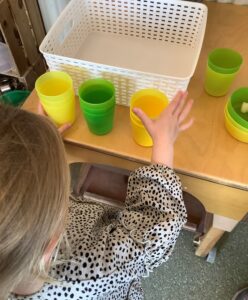
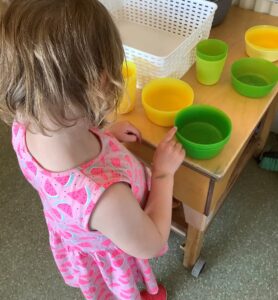
Snack and mealtimes present many opportunities for children to practise counting or subitising at nursery as they find ‘how many’. The context of food and drink provides a real and important reason to know ‘how many’ as they need to make sure that everyone gets their food and drink and in the correct amounts. At Granby Parkgate it is interesting to see how children use their mathematical understanding in this context.


Children can count (or subitise for smaller numbers) how many people there are and how many utensils there are for the meal or snack (e.g., plates, bowls, spoons, or cups). They can also count (or subitise) to find how many food items there are available (such as toast pieces, orange segments, carrot sticks, pots of yoghurt) or how many they need to get for themselves (get three crackers from the packet or bowl).  After we encourage children to help us tidy up by stacking the cups or plates in 3s or they might tell us how many crackers are left for next time.


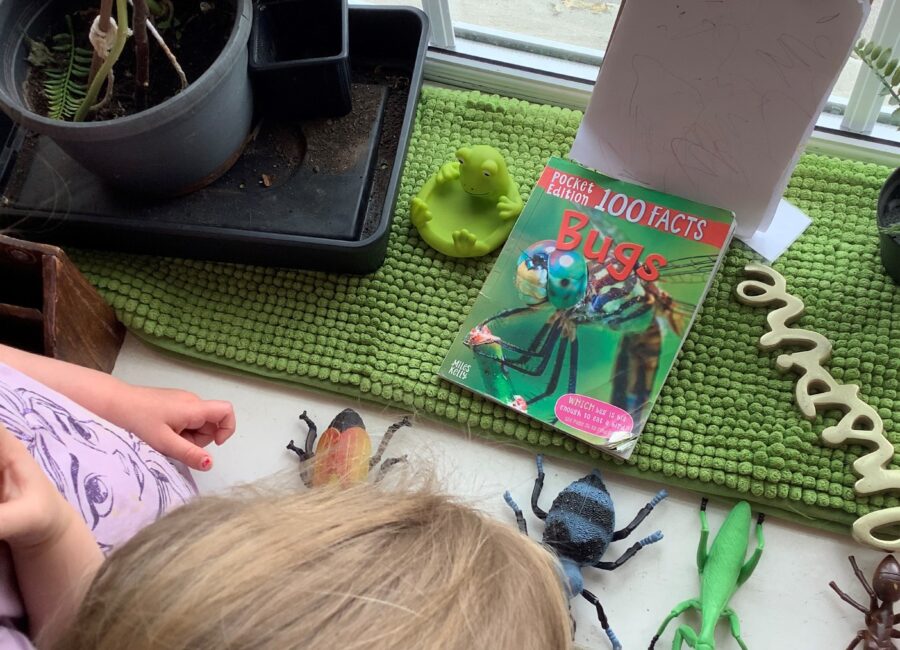
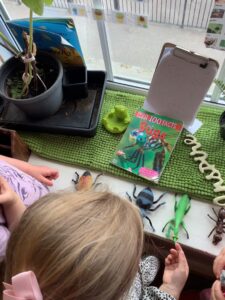
Subitising can be all around us, from counting or seeing the number of legs an insect has or points on a star.


See if you can think of different ways to support your child’s subitising skills in your home or when out and about.


Share this

Online safety – Granby Carlton

Granby Nurseries takes the safety of our children very seriously and this includes their online safety.

Our nurseries are aware of the growth of internet and the advantages this can bring. However, it is also aware of the dangers it can pose, and we strive to support children, staff, and families to use the internet safely.

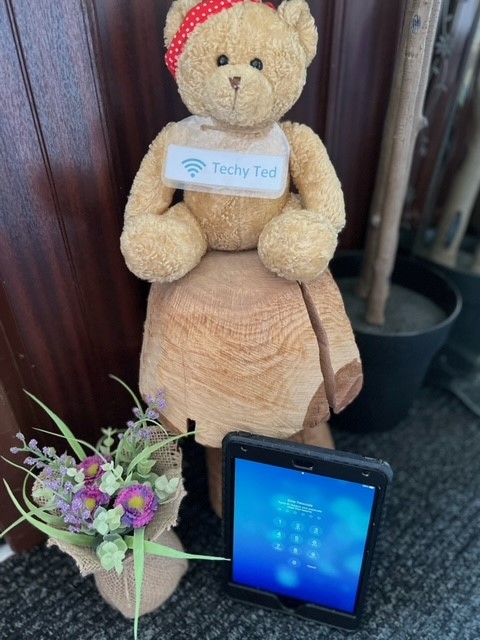
At Granby Carlton we have ‘Techy Ted’, he is a great way for children to learn about online safety. If we need to research something that is on the internet, we always ask him, if he thinks it is safe, he whispers in the adults ear what he thinks, he will often say ‘yes with an adult’ but sometimes he says ‘no’ and will explain that there needs an adult to check the website first or maybe the adults may be busy and to look at a different time.

Techy Ted set’s a good example by role modelling privacy awareness and safe behaviour, he sits on the shelf and keeps an eye on everything that is going on, he also looks after the ipads when they are not in use.

The children are so familiar with him now, that they always ask him what he thinks, or if they are unsure they will ask an adult if Techy ted can help. With technology becoming an integral part of our lives, it’s important that children are familiarised with safe online practice from a young age.

We encourage parents to have the same ethos at home, this avoids any dangers like:

Children being exposed to illegal, inappropriate, or harmful material, being subjected to harmful online interaction with other users; and personal online behaviour that increases the likelihood of, or causes, harm.


Please see the link below for useful information to use at home.

https://www.nspcc.org.uk/keeping-children-safe/online-safety/talking-child-online-safety/

Share this

Supporting Communication – Granby Parkgate

To be effective communicators, we need to be able to use language and speech, but what do these terms mean?

Language is the ability to understand words and sentences so they we can follow what is being said to us.  It involves organising our thoughts and ideas using appropriate vocabulary into grammatically correct sentences ready for talking.

Speech is the ability to combine sounds together to say words.

Communication is the ability to say the right thing, at the right time, and in the right way.  It involves using speech and language skills to send the messages we want to convey to others and to understand the responses.

Non-Verbal Communication is the ability to understand and use gesture, body language, facial expression, our voice and situational clues to help communicate our message.

Speech, Language and communication Need (SLCN) encompasses difficulties children may experience with communication.  Some children may only have difficulties in one area whilst others may have problems in all three.

Here at Granby Nurseries, we monitor all children’s speech and language and support language by modelling.

Modelling is great for supporting expressive language.  At Granby we follow the child’s lead which helps improve their attention as we engage in activities of the child’s own interest, this also helps develop sustained shared thinking and improve children’s attention.

Modelling is based on 3 key principles:

  • Repeat – What the child has said correctly.
  • Emphasise – give emphasis to key words.
  • Expand – add 2-3 words to increase vocabulary.

Modelling should only be done when we feel it is natural to do so and we never interrupt the child or the flow of their conversations as it’s important to wait and listen before modelling back.


Elklan Aiming high with communication (2022) available at: Elklan Training Ltd


Share this

Before they read words, children are reading pictures – Granby Wickersley

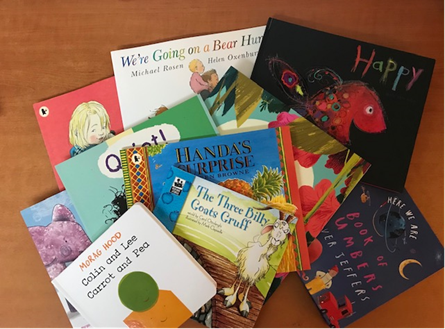
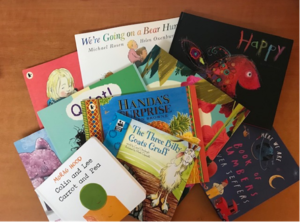
At Granby, we have developed a library of ‘core books’ to encourage an early love of reading. The Centre for Literacy in Primary Education recommends ‘a small collection of high-quality picture books will be much better than a large number of books of variable quality’.

Our selection here at Granby includes The Three Billy Goats Gruff, Handas Surprise, we’re going on a Bear Hunt, Tad & Quiet, to name but a few. These have been chosen for their repetition, story structure and potential to trigger children’s imagination.

Children learn so much from sharing books with a special person. Not only are they learning important skills for reading and writing in later life, but sharing books also helps with talking, listening, and communication skills, as well as encouraging imagination and curiosity. Books can also help children explore and understand emotions such as loss, anger and jealousy safely.

Share this

mikolajki saint nicholas – Granby Carlton

This week we have learnt about Mikołajki.

Ala one of Granby Carlton’s practitioner’s shared the polish tradition with staff and children.

In some countries around the world, it’s believed that Santa Claus arrives in the night on the 24th of December.

Ala told the story how in Poland (and some other countries) Saint Nicholas comes with presents for children on the 6th of December.

This holiday is known as Dzien Świętego Mikołaja or Mikołajki (Saint Nicholas’ Day). Children receive small gifts on the day, the children find them under their pillows, in their slippers or (nowadays more and more often) in a stocking carefully hang out for that purpose the evening before

Ala kindly shared some Polish biscuits and cakes for everyone to try.

At Granby we are very proud of our inclusive practice, we ensure that everyone knows that everyone “belongs” children, parents and/or carers, staff and any other people connected with the early years setting. We treat everyone as an individual and respect their religions and cultures.

Share this

Autumn Treasures – Granby Wickersley

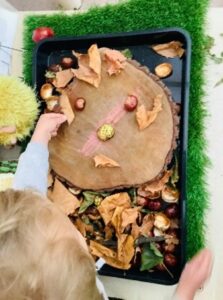
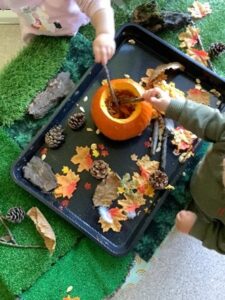
Autumn is such an exciting time in nursery with the opportunity of using lots of natural resources to enhance activities and learning.

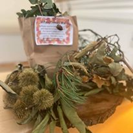
Sending home bags for the children to collect leaves, sticks & conkers on Autumn walks gives opportunities for the children to share their ‘treasures’ back at nursery with friends as well as encouraging a love of outdoors which is good for children’s health & wellbeing.

Using a range of natural resources in nursery allows for the opportunity of open ended play. The resources can be used over and over again and each time children will use them for different purposes.  Using natural resources either on their own or with other resources allows children to use their imagination and demonstrate skills as well as enhancing their sensory development. The way natural resources look, feel and smell all provide children with great learning opportunities as they are eagerly explored.

Natural resources allow children to use their creativity whilst learning rather than creating an end product or result.

Share this

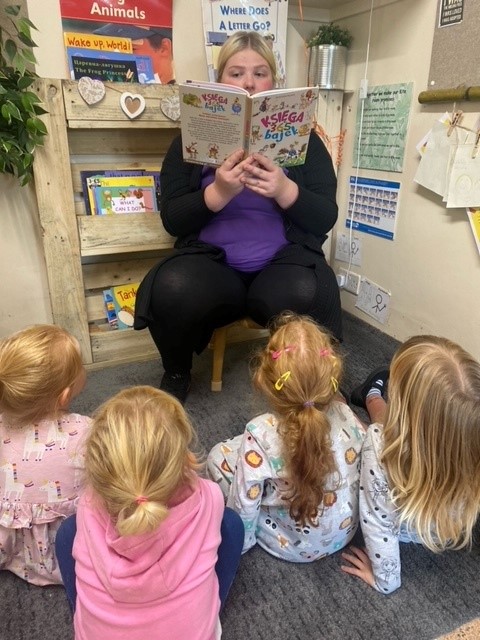
Benefits of bilingual practitioners – Granby Carlton

Granby Carlton are very lucky to have a member of staff that speaks two languages. Children benefit from this in a number of ways.

Some of the main benefits of receiving a bilingual education are:

Increased cognitive development, Improved memory, Improvements in the executive function of the brain.

Alicja joined the Granby Carlton team in May 2021 and has been an enthusiastic addition to the team. Alicja came to England from Poland when she was 10 years old, with the vision of working with children, she succeeded at school and then went on to study Level 3 childcare.

Alicia shares lots of interesting aspects with the children, such as Polish music, food, and talking about the difference in environments, this enables children to understand that although we are very similar, we are also very different. This enhances the Cultural capitol of the setting, by opening discussions about the children’s own experiences, we then extend this by

Research shows that having access to a second language enables children to develop skills such as problem-solving, critical-thinking, and listening skills, in addition to improving memory, concentration, and the ability to multitask.

The children can count in English and polish and are learning some polish songs.

Share this
1 2 3 4